
In effetti, le associazioni di calcio più prestigiose del mondo richiedono che le linee guida delle partite siano quanto più elevate possibile per garantire la ragionevolezza della rivalità. (Prova sul pallone da calcio)
Uno straordinario e valido esempio dell’impegno della FIFA.
L’organismo di supervisione del calcio mondiale ha compiuto passi importanti verso il lavoro sulla natura del gioco promuovendo una serie di modelli utilizzati per valutare la norma dei palloni da calcio all’aperto.
Hanno iniziato nel 1996 presentando un Programma di qualità FIFA per i palloni da calcio, avviato per orchestrare e aumentare la natura della creazione di palloni da calcio in tutto il mondo.
Tuttavia, non si sono accontentati dello status quo nemmeno con la presentazione di questa spinta.
La FIFA ha deciso di formalizzare una regolamentazione esplicita che puntasse ad avere i più grandi principi per i palloni da calcio.
Ecco la dichiarazione per tuo riferimento: (Test del pallone da calcio)
“Tutti i palloni utilizzati nelle partite giocate in un campionato coordinato sotto il patrocinio della FIFA o delle confederazioni dovrebbero soddisfare i requisiti e portare una delle caratteristiche del FIFA Quality Program for Footballs.
Ciascuna impronta dimostra che è stata testata in modo autorevole e soddisfa i requisiti specifici specifici per quel marchio che vanno oltre ai dettagli di base specificati nella Legge 2 e devono essere approvati dall'International Football Association Board (IFAB).”
Fonte – Legge sulla Federcalcio 2
Se stai considerando quali sono i segnali del FIFA Quality Program, mi prenderò un breve secondo per capirne il senso.
- Quali sono le caratterizzazioni della qualità del pallone da calcio
- Quali componenti del pallone da calcio vengono provati
- Circuito
- Sfericità
- Capacità di rimbalzo
- Ritenzione idrica
- Peso
- Perdita di tensione
- Mantenimento della forma e delle dimensioni
- Dove viene portato il test del pallone da calcio
- Per quale motivo bisognerebbe provare i palloni da calcio?
- Considerazioni di chiusura
Quali sono gli ordini di qualità dei palloni da calcio
Ci sono tre marchi di autorità concessi ai palloni da calcio che determinano come superare gli standard di test approfonditi che la FIFA ha ideato per la valutazione della qualità.
Hai le licenze di accompagnamento:
Qualità approvata dalla FIFA;
Qualità FIFA controllata; E
Standard di corrispondenza globale
Puoi percepire come ogni identificazione ricerca in modo approfondito nell'immagine sottostante:
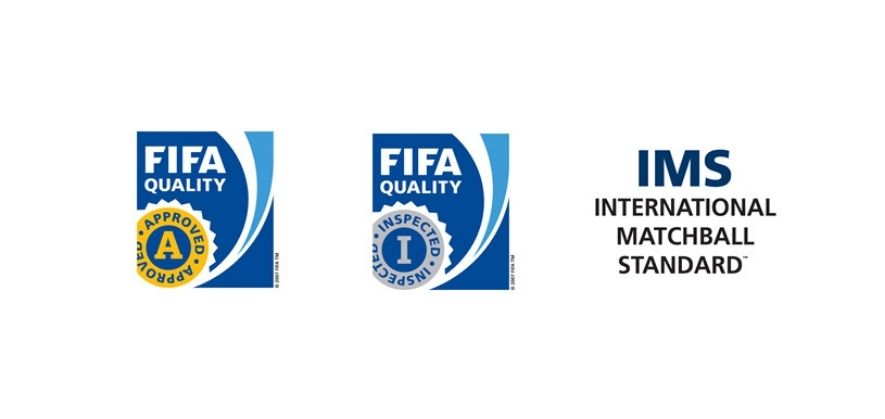
I produttori dovrebbero presentare un totale di 7 palloni da calcio se intendono richiedere lo status di “ispezione FIFA”, mentre dovrebbero presentare 10 esempi se avessero bisogno del logo “approvato FIFA” molto più ricercato impresso sui loro palloni da calcio. (Test del pallone da calcio)
D'altra parte, la funzionalità “Global Match Standard” è meno impegnativa delle due precedenti.
Quando un pallone da calcio completa il metodo di prova della FIFA e supera con successo i test, gli viene assegnato un segno di valore alla luce delle sue prestazioni durante il tempo di test.
Ad esempio, un pallone da calcio che ha un'identificazione “Approvato FIFA” avrebbe dovuto riscontrare un problema di tensione gassosa fino a 20% durante il sistema di test, sebbene il problema di tensione OK per un “Ispezionato FIFA” sia sostanzialmente pari a 25%.
Ecco un video che solleva l'intero punto gratuitamente dal Programma di qualità della FIFA:
Ora che sei consapevole degli obiettivi che ogni pallone da calcio deve raggiungere, dovremmo dare un'occhiata esattamente su quali aree di esecuzione vengono ispezionati. (Test del pallone da calcio)
Quali componenti del pallone da calcio vengono provati
Il mio articolo che discuteva di quali palloni da calcio utilizzano i giocatori esperti ha fornito agli utenti alcuni dati sulle regioni espositive in cui vengono provati i palloni da calcio.
Eppure, qui, farò un salto più profondo.
In questo modo, ecco qui!
1. Circonferenza
Nella prova fondamentale, i primi tre palloni da calcio verranno modellati per un periodo di 24 ore, dopodiché verranno gonfiati ad un determinato livello di tensione.
A quel punto, il valutatore effettuerà una stima dell'ampiezza di ciascuna palla in 10 posizioni caratterizzate e vedrà se le cifre sono in linea con i principi autorevolmente riconosciuti.
Per il benchmark “Approvato dalla FIFA”, questo dovrebbe essere compreso tra 68,5 centimetri e 69,5 centimetri, mentre “Ispezionato dalla FIFA” richiede solo un circuito compreso tra 68 e 70 centimetri per un pallone da calcio di misura 5.
Il motivo per cui questa stima è significativa è il risultato del modo in cui un pallone da calcio con un perimetro prevedibile consente ai giocatori di ottenere un controllo ideale mentre stabiliscono contatti ed eseguono movimenti come la caduta.
2. Sfericità
Successivamente abbiamo la sfericità.
In termini meno difficili, ciò che stiamo vedendo qui è la rotondità duratura del pallone da calcio.
Ancora una volta all'infinito ho discusso dell'importanza che i palloni da calcio siano di forma circolare, tuttavia non fa male fare riferimento ai vantaggi.
Un pallone da calcio completamente rotondo offre a un giocatore il palcoscenico migliore per esibirsi al massimo delle proprie capacità.
Poiché il calcio è una sorta di diversivo, la FIFA crederà che gli osservatori debbano divertirsi e interrogarsi sull'eccellenza del gioco.
Ciò può accadere presupponendo che i palloni da calcio mostrino un disegno di volo ragionevole e non sorprendente quando sono in aria.
It wouldn’t be a lovely sight to see a player endeavor to bend a soccer ball, just for it to move a couple inches as a result of having an inadequately adjusted figure!
Thus, at this stage the breadth of the soccer ball is estimated after it has been swelled to a tension degree of 1 bar.
The measurement of distance across then happens at the center of 16 boards, and ensuing to that a normal is determined.
Here, the contrast between the least and most elevated measurement figures should not surpass 1.5% for the “FIFA Approved” name, albeit a more prominent breathing space of 2% is given for the “FIFA Inspected” standard.
3. Rebound ability
Thirdly, we have the assessment which covers a soccer ball’s bounce back capacity.
Players must have the option to expect the bearing of a ball, particularly when it skips off of a grass or engineered turf surface.
It would be adverse to the game on the off chance that soccer balls bobbed in a flighty way, as members will wind up confounded and begin re-thinking their own developments on the pitch.
Thus, with this test, a soccer ball is dropped multiple times from a level of 2 meters onto a steel plate.
Utilizing a camcorder, the distance covered when the ball bounce back off of the surface can be recorded utilizing the bounce back level of the underside (lower side) of the ball as the reference point.
For quality principles, the contrast between the most elevated and least bob ought to be something like 10 centimeters separated.
All the more thus, the level, everything being equal, should settle somewhere in the range of 120 and 165 centimeters for a “FIFA Approved” standard, or somewhere in the range of 115 and 165 centimeters for a “FIFA Inspected” quality honor.
4. Water absorption
A soccer ball that is wet shows pretty unique way of behaving from one that has been kept in a dry state.
Assuming you’ve played soccer in the downpour previously, you might have noticed that wet soccer balls tend to:
travel through the air much more leisurely;
have a lower bounce back level while bobbing off of the ground
be more challenging to bend and hit with power
This is where the water retention test comes in, as it guarantees that soccer balls don’t get too weighty when they take up dampness.
Presently, this test is really a really clear one.
Here, a soccer ball is lowered in a water-filled vessel as it is squeezed and turned around various times.
When that assignment has been finished, the ball is then eliminated from the water prior to being cleaned down and yet again gauged.
The weight increment is communicated – in rate terms – by correlation with the first weight of the ball before it was suffocated in, in light of the fact that this is the way the analyzers show up at how much water was assimilated.
To meet the “FIFA Approved” standard, an expansion in weight of something like 10% is required, while the limit for “FIFA Inspected” sits at a 15% weight increment.
5. Weight

The greatness or softness of a soccer ball becomes significant when the part of reliable playing reaction comes to the front.
On the off chance that it is either excessively light or excessively weighty, you can anticipate that it should move with less consistency, particularly while it’s in flight.
In this way, as a component of the testing system here, the example balls are expanded and shown up a standard environment utilizing a breeze safeguarded electronic equilibrium, that keeps any mistakes from influencing the consequences of the information being gathered.
“FIFA Approved” loads rest somewhere in the range of 420 and 445 grams, while figures should be somewhere in the range of 410 and 450 grams for the “FIFA Inspected” mark.
6. Loss of pressure
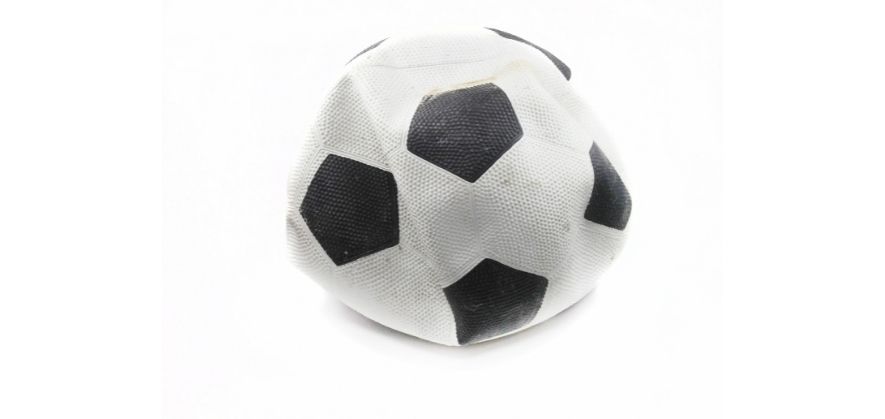
The 6th test is about soccer balls losing air.
A playing experience can be adversely impacted in the event that a soccer ball loses gaseous tension moderately rapidly, with components of the game becoming flighty and conflicting subsequently.
For example, it would be substantially more challenging for members to make long passes and profound crosses with a soccer ball that needs adequate air amount.
The ball is probably going to fizzle at arriving at its expected objective, halfway on the grounds that it in all likelihood won’t go through the air quickly enough or sufficiently high.
As a feature of this test, a soccer ball is swelled to a characterized pressure level and left to rest for 3 days.
After that period has passed, an overseer will take its pneumatic stress estimation to work out the level of air lost over the course of that time.
For a “FIFA Approved” standard, a limit of 20% misfortune in pressure is permitted, though the “FIFA Inspected” level considers a limit of 25%.
7. Shape and size retention
The last test is just completed on “FIFA Approved” soccer balls.
The reason behind this one is that a soccer ball ought to be in a similar execution state toward the finish of the game as it was in toward the start.
As the normal match includes roughly 2000 kicks of a soccer ball, a test is made to recreate such a climate to see if the ball being referred to can hold up to the afflictions of a cutthroat match.
When the soccer balls are expanded to a predefined pressure level, they are advanced rapidly by two pivoting chambers which turn the balls at a specific speed.
During this cycle, the soccer balls hit a steel outline ceaselessly at speed and points that are predictable.
After 2000 “hits” the chambers are halted from turning the balls and afterward any expansions in circuit or contrasts in generally sphericity are estimated.
To breeze through this assessment, soccer balls should likewise come out solid with valve openings that give no indications of harm and it is as yet unblemished to join that.
Furthermore, here are the exact metric qualifiers:
Expansion in boundary – limit of 1.5 centimeters permitted
Roundness deviation – limit of 1.5% permitted
Change of strain – greatest reduction of 0.1 bar permitted
Where is the soccer ball testing conducted?
To go through such a requesting quality assessment process, offices with the furthest down the line mechanical hardware should be made accessible for analyzers.
Indeed, the wizardry is said to occur at EMPA Materials and Science Technology – which is a Swiss government lab for materials testing and exploration that is situated in St. Gallen, Switzerland.
Per quale motivo bisognerebbe provare i palloni da calcio?
Soccer ball testing is perfect for planned purchasers since they don’t need to stress over buying a ball that would give them significant issues further down the existence cycle.
FIFA’s trying methods nearly ensure quality since you are choosing a ball that has formally been endorsed for play because of the intensive exhibition testing it has gone through.
This wasn’t true before FIFA imagined their quality program.
Various producers made soccer balls that differed enormously in quality from each other, and there was a great deal of vagueness on the lookout, as purchasers didn’t know whether they would need to return a recently bought ball in a couple of days or whether it would keep going for two or three years.
In this regard, things have surely been made more straightforward because of soccer ball testing.
Shutting contemplations
That finishes my article on how soccer balls are tried!
Ideally you will have gotten pieces and snippets of data that can illuminate your own decision making when you need to purchase a soccer ball.
Furthermore, coincidentally, assuming you really want assistance with that cycle, I’d propose you look at our total purchasing guide on the best soccer balls, as it’s an extraordinary beginning stage for unpracticed purchasers.


 English (United States)
 English (UK)
 English (Canada)
 English (Australia)
 Arabic
 German
 Spanish
 Persian
 French
 Italian
 Japanese
 Korean
 Portuguese
 Romanian
 Chinese
 Russian
 Turkish
 Dutch
Dutch Indonesian
 Hindi
Hindi Urdu
Urdu Swahili