
Table of Contents
- What is Islam? What is the Purpose of Islam
- Five pillars, books, and sectors in Islam and why Islam faced resistance from other religions?
- 1. Five Pillars of Islam (Forming Individual & Social Life)
- 2. Books in Islam
- 3. Sectors in Islam
- 4. Why Islam Faced Resistance from other religions
- Teachings of Prophets for Faith, Social and Reproduction matters
- Reminder of Quran for everyone
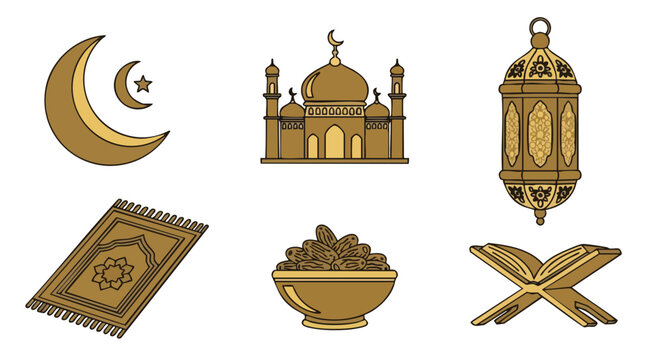
1. How the Five Pillars of Islam Forms the Individual’s & Social Life?
With the implementation of social laws, Last Prophet Muhammad ﷺ established just society with 5 pillars, to regulate individual and social routines for a stable and responsible society.
- Declaration (Shahadah): “There is no Creator but Allah (For unity), and Muhammad ﷺ is His Messenger” (A Role model to follow)
- Prayer (Salah): 5 times daily—Promotes discipline, mindfulness, and structured daily work routine practice (with physical activity).
- Fasting (Sawm): Fasting in Ramadan builds self-control, discipline thoughts, and moral reflection.
- Charity (Zakat): A mandatory annual contribution of 2.5% on unused or surplus wealth. Intended to reduce poverty, support the needy, and strengthen social solidarity.
- Pilgrimage (Hajj): Every muslim is responsible to perform Hajj one time in his life (if capable) in the city Makkah. It encourages unity, equality, and a shared sense of purpose among humans.
Ka’ba in Islam, is a symbol for one direction and unity for humans’ on earth, it is not an object to worship.
What is the True Meaning of Worship Prophets Taught Through Quran?
All Prophets taught True meaning of worship – purifying thoughts, souls, and actions by praising One Creator for everything with patience and gratitude while seeking forgiveness for own ignorance and mistakes with humility. In the same way as Quran described.
| “Righteousness is not that you turn your faces toward the east or the west, but true righteousness is in one who believes in Allah, the Last Day, the angels, the Book, and the prophets; who gives wealth ‘despite loving it’ to relatives, orphans, the needy, the traveler, those who ask, and for freeing slaves; who establishes prayer and gives zakāh; who keeps their promises when they make them; and those who are patient in hardship, suffering, and during battle. Those are the ones who are truthful, and it is they who are the righteous.” — Al-Baqarah 2:177
2. Books in Islam
2.1. Quran
The Quran (book of truth for humanity) is the primary book of Islam with true facts for right guidance with basic laws for human society. Perfectly preserved from 1400+ years through memorization and oral transmission. Also, the Quran itself secures its message from editing/removing, with repeated and similar verses.
| “Indeed, it is We who sent down the Qur’an, and indeed, We will be its Guardian.” Al-Hijr (15:9 2).
2.2. Hadith Books
Hadith Books were compiled by scholars on Prophet Muhammad’s ﷺ life, in accordance with the Qur’an’s command to follow the Prophet’s example. These books are serving as secondary guidance that explains how Qur’anic teachings were practiced in real life.
| “Indeed, in the Messenger of Allah you have an excellent example for whoever has hope in Allah and the Last Day and remembers Allah often.” Al-Ahzab (33:21)
Prophet Muhammad ﷺ himself commanded the followers to use the Quran’s wording to invite people toward truth.
3. Sectors in Islam (Like Shia, Sunni)
After Prophet Muhammad’s ﷺ lifetime, differences in jurisprudence and methodology for understanding the Qur’an and Prophet’s ﷺ teaching contributed to the formation of different schools of thought. Which caused diversifications in Islam.
Sectors in Islam are not divided, but they are only diversified because they are still connected to the main root—the holy book Quran, the foundation of Islam in the present world.
Islam doesn’t accept such activities:
In Islam, any practice that contradicts pure monotheism and the guidance of the Qur’an and the Prophet’s ﷺ teachings is not owned or approved by Islam, even if any person from any sector or community engages in it. Like:
- Shirk (associations with Creator, Create Divisions in the name of Creator)
- New Prophets after Prophet Muhammad ﷺ (it threats Quran’s message and causes confusions)
- Bid‘ah (Religious innovations)
- Superstition and fortune-telling
- Seeking help via dead, angels, saints, spirits, or graves instead of asking Allah directly.
- Harming people unjustly in the name of religion — Any act that injures a human being’s life, dignity, wealth, safety, or mental well-being without truth and justice.
4. Why Islam Faced Resistance from other religions
Each group resisted Islam for its own reason:
- The People of the Book (Jews & Christians) — out of jealousy and pride.
- The Mushriks (associators, idolaters)—out of fear of losing business and control, which was based on division.
- The Atheists — out of denial and misunderstanding of reality.


 English (United States)
 English (UK)
 English (Canada)
 English (Australia)
 Arabic
 German
 Spanish
 Persian
 French
 Italian
 Japanese
 Korean
 Portuguese
 Romanian
 Chinese
 Russian
 Turkish
 Dutch
Dutch Indonesian
 Hindi
Hindi Urdu
Urdu Swahili